
Sports & Technical
Sports & Swimwear Fabric Guide
Ten performance qualities — swimsuit and sport Lycra, waterproof rainwear, softshell, board short and poly terry. Four-way stretch, sublimation printed, one metre minimum.

Vor der Bestellung
Erst auf echtem Stoff sehen
Sie müssen keinen kompletten Auftrag erteilen, um Griff und Farbwiedergabe zu beurteilen.
Jede Qualität, die wir bedrucken, unbedruckt in einem Kartenset. Der schnellste Weg, Gewicht, Griff und Deckkraft zu beurteilen.
Musterpaket bestellen — €9.00Bei den Polyester-Qualitäten dieser Familie können Sie statt Metern ein 20 × 20 cm großes Stück Ihres Designs bestellen. Datei hochladen, Qualität wählen, dann die Größe auf „20 × 20 Test“ umstellen.
Design hochladen und 20 × 20 wählen — €5.00Das Sortiment
Die 10 Qualitäten, die wir in dieser Familie drucken


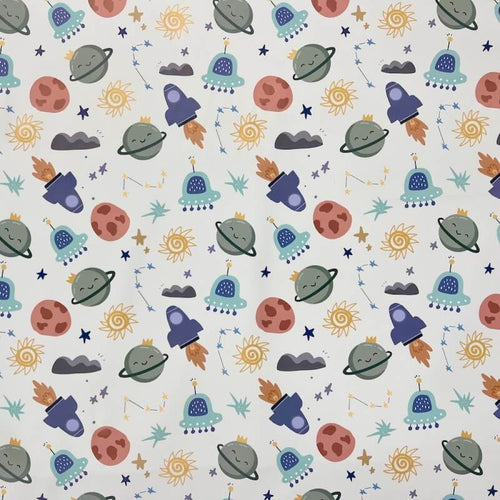


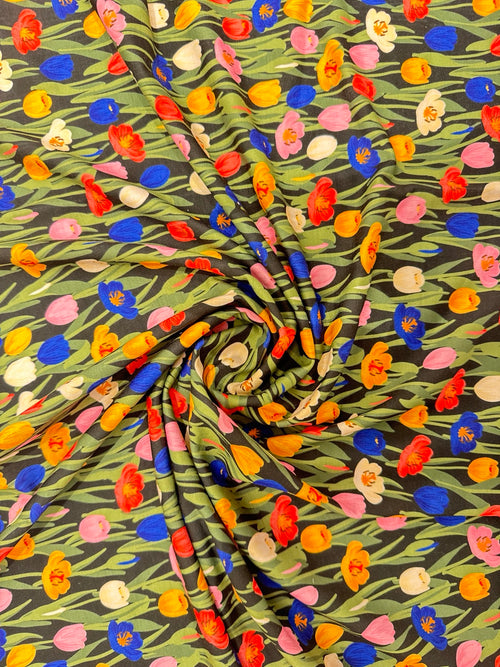

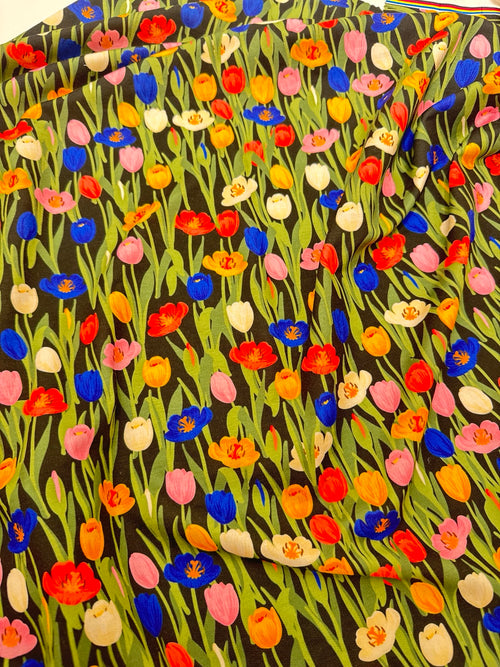
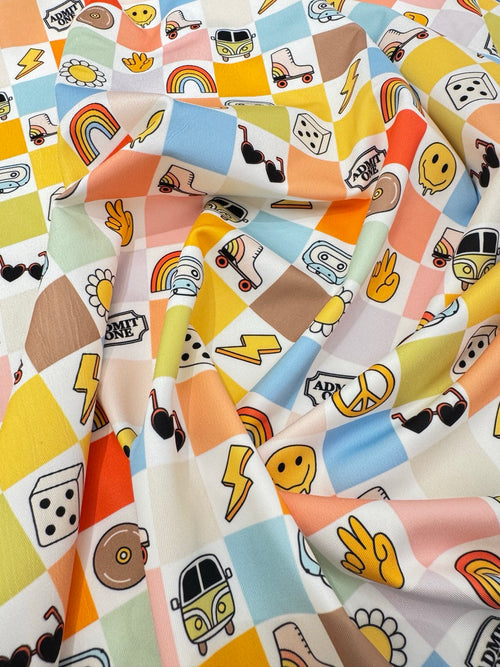
What makes a fabric a performance fabric
Three things, and they are all mechanical rather than magical. The cloth has to stretch in all directions and come back, so the garment moves with the body instead of fighting it. It has to move moisture away from the skin, which polyester does naturally because the fibre does not absorb water. And it has to survive chlorine, salt, sweat and UV without going slack or losing colour.
Elastane — the same fibre sold as Lycra or spandex — is what supplies the recovery. Below about 8% you get stretch with only moderate spring-back. At 18–20% you get true four-way stretch that holds compression, which is what swimwear and cycling kit need.
The qualities, and what each is actually for
Swimsuit Lycra — 180 gsm. High elastane, four-way stretch, chlorine resistant. Swimwear, leotards, dancewear. Light enough to line comfortably.
Sport Lycra — 220 and 230 gsm. The general-purpose activewear cloth: leggings, tops, cycling jerseys, team kit. The 230 is the one most people end up ordering — opaque enough for leggings without being heavy.
Heavy Sport Lycra — 300 gsm. Compression weight. Squat-proof, holds shape through hard use, used for shapewear and serious training kit.
Board Short fabric — 90 gsm. Woven, not knitted, with a water-repellent finish. Light, quick-drying, minimal stretch — board shorts, beach shorts, light shells.
Rainwear — 120 gsm, waterproof. Coated, so water runs off it. Rain jackets, covers, dry bags. It does not breathe like a membrane does; this is a rain barrier, not a technical shell.
Softshell with fleece — 300 gsm. Bonded: a smooth wind-resistant face over a fleece back. One layer that behaves like two. Mid-season jackets, dog coats, hoodies with some weather resistance.
Poly French Terry (Stretch) — 230 gsm and the sweatshirt fleeces at 300 gsm, brushed and unbrushed. The athleisure end — joggers, hoodies, sweatshirts that need to be printed edge to edge rather than screen-printed with a logo.
Printing performance fabrics
All of these are sublimation printed, which matters more here than anywhere else in the range. A sublimated print cannot crack when the fabric stretches, cannot peel in chlorine, and adds no weight or stiffness — because there is no layer sitting on the surface. Screen print and vinyl on a stretching, sweating garment both eventually fail; this does not.
Production is about a week, plus the days it takes you to approve the proof.
Before you order
- Minimum 1 m per design on all of these.
- Test the stretch direction. Order a swatch or a €4.90 test print and pull it both ways before you cut a pattern — grading for four-way stretch is not the same as for two-way.
- Size down. High-elastane patterns are normally drafted with negative ease. If you are adapting a woven pattern, it will be too big.
- Needles and thread. Stretch or ballpoint needle, and a stretch stitch or overlocker — a straight stitch will snap.
- Widths run 145–160 cm here; check the quality page.
Weiterlesen
Die anderen Stoff-Ratgeber
Bevor Sie sich festlegen
Erst anfassen
Mit einem Musterpaket beurteilen Sie Griff und Gewicht selbst. Ein Testdruck für €5.00 geht weiter — er bringt Ihr eigenes Design auf die gewählte Qualität, gedruckt auf derselben Maschine wie ein vollständiger Auftrag.