
Cotton Wovens
Cotton Woven Fabric Guide
Voile, lawn, poplin, sateen, double gauze and linen — sixteen woven qualities from 45 to 200 gsm, printed reactive in İstanbul.

Print quality
What reactive printing does to the colour
The dye bonds with the cotton fibre instead of sitting on top of it as a film. That is where the depth comes from — and why the printed area stays as soft as the unprinted area.


Before you order
See it on real fabric first
You do not have to commit to a full run to find out how a fabric feels or how your colours come out.
Every quality we print, unprinted, on one card set. The quickest way to judge weight, handle and opacity.
Order the swatch pack — €9.00Cotton and viscose qualities go through a different print process, so the smallest run of your design is 5 metres — you can order that straight from the fabric page. The swatch pack covers the fabric itself.
Order 5 m with your designThe range
The 16 qualities we print in this family
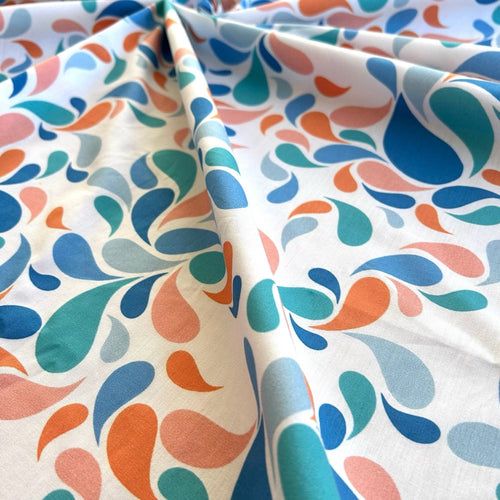


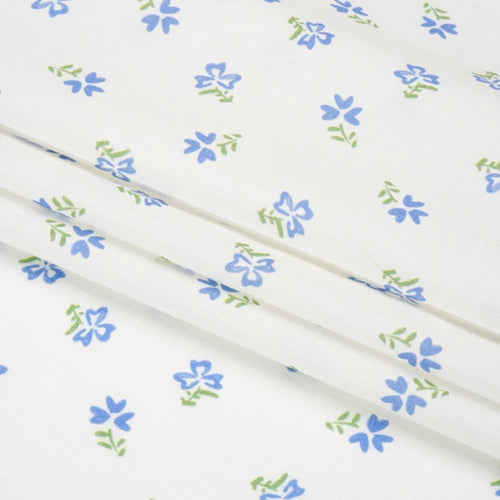


Woven cotton: no stretch, and that is the point
In a woven cloth two sets of yarn cross each other at right angles. Nothing loops, so nothing stretches — which is why a woven shirt keeps its collar crisp and a woven dress holds a pleat. The trade is that it frays at a cut edge and gives you no forgiveness in the fit, so sizing has to be right.
Weight is the decision that matters most here, and it is measured in grams per square metre. Below about 100 gsm you are in shirting and scarf territory, light enough to see through. Around 120 gsm is quilting and dressmaking cotton. Past 200 gsm the cloth starts to stand up on its own.
Reading the names
Voile and lawn are the fine, light ones — voile is the airier of the two, lawn slightly denser with a smoother, almost silky face. Both are semi-sheer; hold one up and you will see light through it.
Poplin is the workhorse. A tight plain weave, flat and even, which is why printed detail comes out crisp on it. Ours run 100 to 120 gsm, and there is a stretch poplin with a little elastane if you want a fitted shirt that still moves.
Sateen is woven so more of the yarn floats on the surface. That gives it a low sheen and a smoother hand, and it is the best of the cottons for photographic or finely detailed artwork because the face is so even.
Double gauze is two fine layers held together with tiny tack points. It crinkles when washed, it breathes, and it is soft in a way a single layer cannot be — which is why it ends up in babywear and summer dresses. The four-layer version is heavier and absorbent enough for towels and blankets.
Linen is not cotton at all, but it lives here because it behaves like a woven: no stretch, a visible slub in the surface, and it creases honestly. It softens with every wash.
How we print them
All of these take reactive dye, the same process as our cotton knits: the colour bonds into the fibre, survives washing, and leaves the cloth feeling like cloth rather than like a printed sheet. Production runs two to three weeks because of the steaming and washing that follow the print.
Before you order
- Minimum 5 m per design.
- Finish your edges. Woven cotton frays. Overlock or stay-stitch 1–2 cm in from the cut edge before you pre-wash.
- Check the width on the quality page before scaling a repeat — most run 150 cm, the twills and some canvases 160.
- Semi-sheer means semi-sheer. Voile and lawn will need lining for anything fitted.
Keep reading
The other fabric guides
Before you commit
Feel it first
A swatch pack lets you judge the hand and the weight yourself. A €5.00 test print goes further — it puts your own design on the quality you picked, printed on the same machine as a full order.