
Polyester
Polyester Fabric Guide
Seventeen polyester qualities from a 70 gsm matte satin to a 280 gsm heavy scuba — sublimation printed, one metre minimum, about a week in production.

Before you order
See it on real fabric first
You do not have to commit to a full run to find out how a fabric feels or how your colours come out.
Every quality we print, unprinted, on one card set. The quickest way to judge weight, handle and opacity.
Order the swatch pack — €9.00On the polyester qualities in this family you can order a 20 × 20 cm piece of your own design instead of metres. Upload your file, choose the quality, then switch the size to “20 × 20 test”.
Upload a design and pick 20 × 20 — €5.00The range
The 17 qualities we print in this family


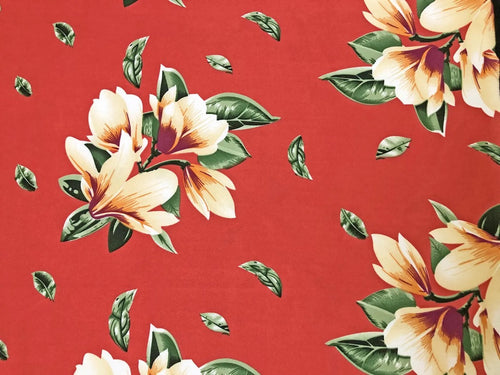


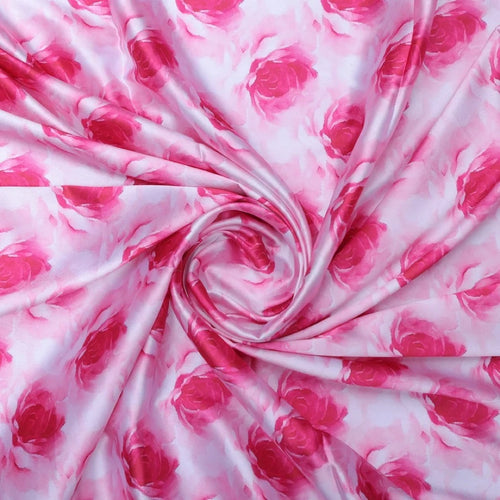
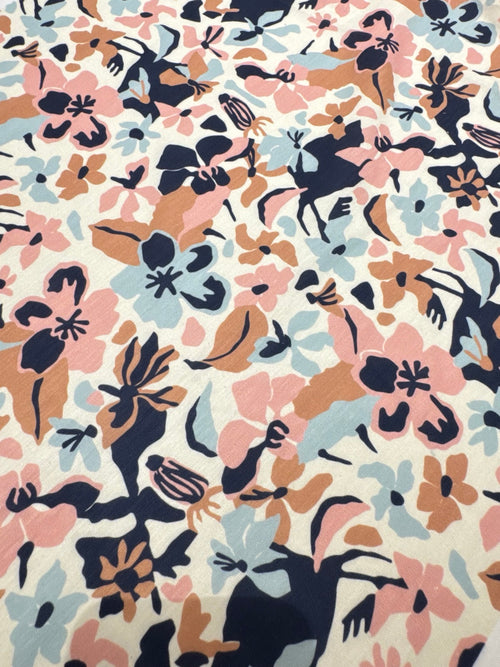

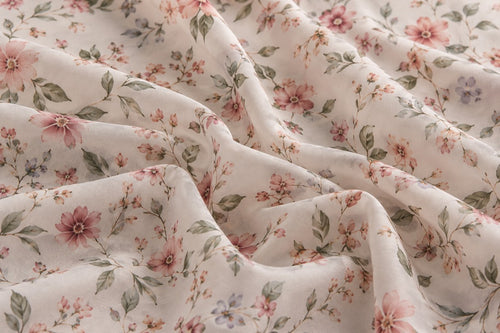
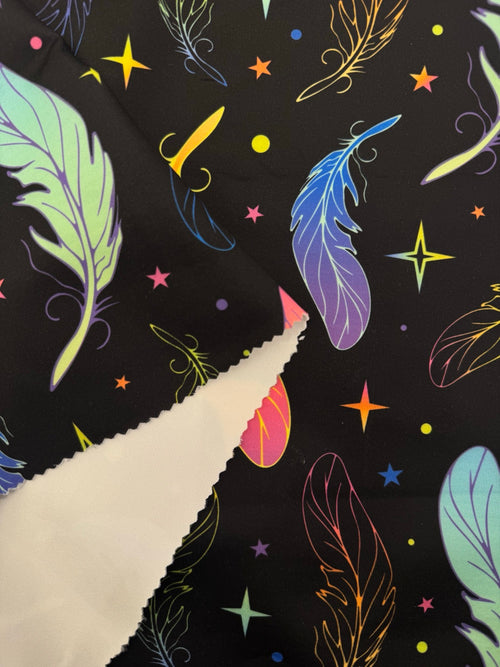
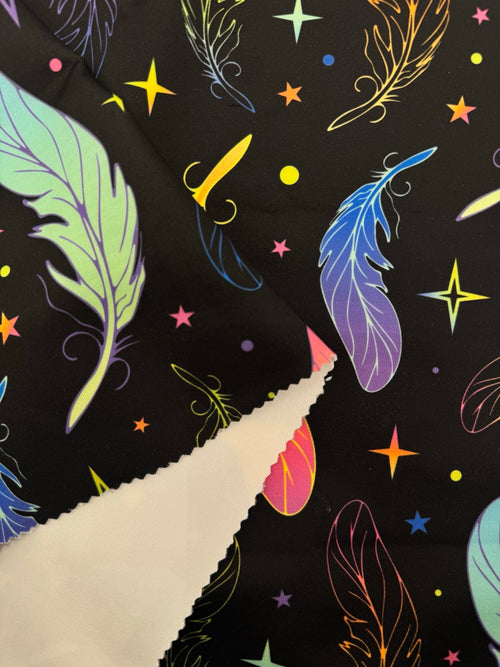
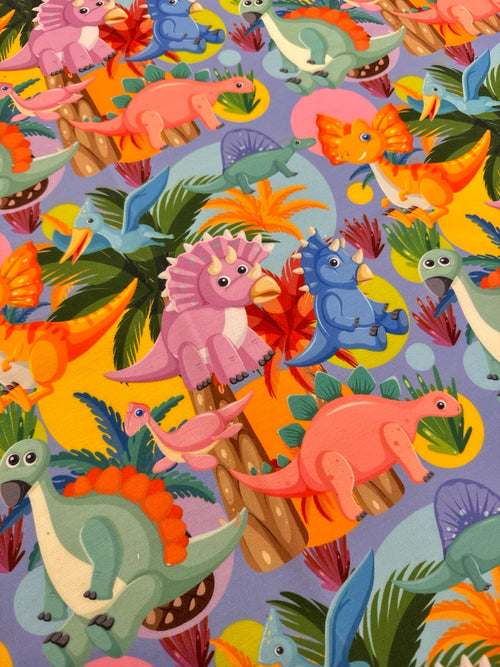

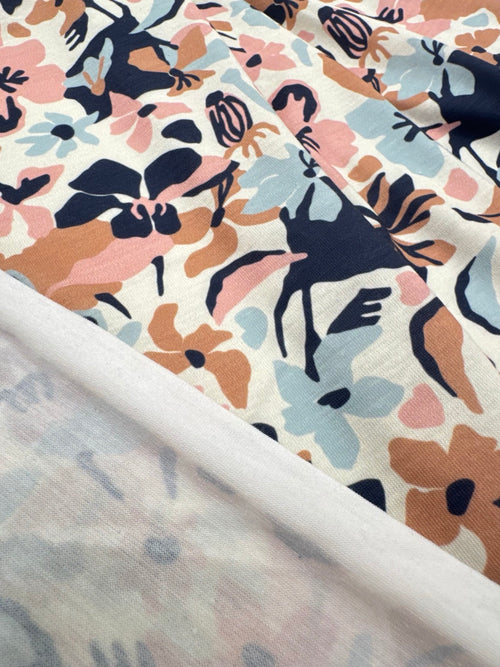


Why polyester is where most printing projects start
Polyester takes sublimation printing, and sublimation changes the economics of a small run. Instead of dyeing the cloth in a bath, the design is printed onto transfer paper, then heat turns the ink into a gas that bonds directly into the polyester fibre. There is no washing stage afterwards, no minimum bath size, and nothing is wasted setting the machine up.
That is why our polyester minimum is one metre, and why a 20 × 20 cm test print costs less than a coffee. It is also why polyester comes back in about a week rather than two to three.
The catch, and it is worth saying plainly: sublimation only works on polyester. On cotton the gas has nothing to bond to. If your design has to go on a natural fibre, you are in reactive printing and the 5 m minimum applies.
How the print looks and feels
Because the dye becomes part of the fibre, the printed area feels exactly like the unprinted area — no stiffness, no cracking, nothing to peel. Colours come out more saturated than on cotton, and photographic artwork, gradients and fine linework reproduce more faithfully. If you have a design with a deep black or an electric colour, polyester will give you the version closest to what you see on screen.
The range, roughly by what it is for
Light and fluid — 70 to 90 gsm. Matte polyester satin and silky polyester crepe. These are the ones for scarves, linings, blouses and anything that should move. The matte satins in particular are the practical alternative to real silk: similar drape and sheen, a fraction of the price, and they print with more colour.
Everyday knits — 140 to 180 gsm. Spun poly jersey, textured poly jersey, poly stretch jersey, stretch piqué. Spun poly is the one that looks and feels closest to a cotton t-shirt while still taking sublimation. Stretch piqué has the small waffle texture you know from polo shirts.
Structured — 220 to 280 gsm. Scuba and heavy scuba are smooth, dense, double-knit and hold a sculpted shape; they are what you want for a structured dress or a bag panel. Polyester knit at 220 gsm is the flatter, firmer option.
Warm — 280 gsm and up. Fleece, and the polyester side of our sweatshirt fabrics.
Specials. Mesh and tulle-net for overlays and sportswear panels, and knit lining at 120 gsm — the cheapest way to print an interior.
Before you order
- Minimum 1 m per design. No setup fee, no volume commitment.
- Try it first for €4.90. A 20 × 20 cm test print of your own artwork, printed on the machine that would print the full order.
- Widths vary from 145 to 185 cm across this family. Check the quality page before you scale a repeat.
- Polyester does not shrink the way cotton does, and it creases far less — useful for anything that ships folded.
- Heat. Press warm, not hot, and keep an iron off the face of the satins.
Keep reading
The other fabric guides
Before you commit
Feel it first
A swatch pack lets you judge the hand and the weight yourself. A €5.00 test print goes further — it puts your own design on the quality you picked, printed on the same machine as a full order.